Site Research Index World Heritage This is our master collection page for all of our heritage articles and sites. It is the root of our tree of sites covered within Brigantes Nation. Both within and …
Boltby is a very important ancient site IMO. A gold “hair braid”, was found there, linking it to the Amesbury Archer, buried with two similar hair braids. This also provides a link to the founding of Stonehenge, which helps set a potential scene for a possible “zeitgeist”, of the day.
Swaledale occupies the long, sinuous valley carved by the River Swale on its 45-kilometre descent from Nine Standards Rigg (662 m) on the Pennine watershed to Richmond in lower Teesdale. The dale narrows between rough gritstone scarps near Keld, broadens to a patchwork of hay-meadows around Muker and Gunnerside, then opens into a tree-fringed flood-plain west of Reeth before the river cuts through the Carboniferous escarpment to meet the Vale of Mowbray.
Between the mid-18th and late-19th centuries the British Parliament passed almost 5,000 local “Inclosure Acts.” Each Act authorised a team of appointed commissioners to survey one specific township or parish, divide its open-field strips, common pastures, and “wastes” into new, privately owned parcels, and lay out straight roads and boundary walls or hedges. The commissioners issued a legal award map and schedule that became the new title deeds.
County Durham’s landscape is often described as a “three-belt county.” To the west rise the high, windswept Pennines; in the middle lies a sheltered coal-bearing vale that funnels every main road and railway; and to the east stands the pale Magnesian-Limestone escarpment ending in low cliffs above the North Sea.
At its core the “hero” is the figure who steps out of ordinary society, confronts chaos or a monster, and returns (or dies) having secured order for the group. In Jungian and comparative-myth terms it sits in the “warrior-champion” slot of the collective story-board; evolutionists would say it crystallises the survival value of decisive coalition leadership in small bands.
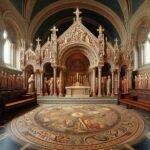
This head is one of thirteen “Celtic”, or archaic heads that are located within the interior of the church. Twelve of those heads, including this one, are located in four rows of three, which run down either side of the churches arched columns. The thirteenth head is located in the bell tower.
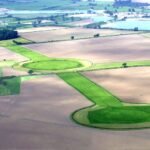
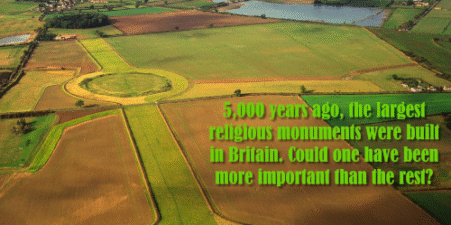
The stats for this Neolithic monument are astounding: 200m across, once a great circle of earthen banks and deep ditches. Today, almost lost: 5,000 years of plough and neglect have flattened the banks and filled the ditches, and Cana Henge is now nothing but a smoothly undulating grassy field on the moor overlooking Ripon.
Sion lies midway along the upper Rhône Valley, an east‑west trench gouged by repeated Pleistocene glaciers and now flanked by the Pennine and Bernese Alps. The settlement area sits on the alluvial fan of the Sionne torrent, a cone of well‑sorted sands and gravels that projects onto the wider Rhône flood‑plain.
Welcome to Brigantes Nation! The site that invites you to get involved in researching the Brigantes of Britain, Ireland and Spain.
The name Brigantia represents three separate concepts: a goddess, a people, and a tribal federation. By the Roman period, the name represented a tribal federation compromising all of what would become the Roman province of Britannia Secunda, except for the Parisi territory, east of the River Derwent.
Before the arrival of the Romans, West Yorkshire and much of the Pennine uplands were occupied by a loose association of tribes known as the Brigantes. The name seems to mean ‘the high one’, which is a suitable epithet for a group of people living in the more mountainous regions of Britain.
Historians know little about the Brigantes before the arrival of the Romans. Presumably their ruler at the time was one of those who surrendered to Claudius at Colchester in AD 43, but they are not mentioned by name. By the early 50s AD, they were being ruled by Queen Cartimandua. She lost her control of the tribe in AD 69, following an uprising led by her ex-husband Venutius. The Romans put down the rebellion and then went on to conquer the rest of northern Britain.
Brigantes Nation is a website for people interested in researching the Ancient Tribe of the Brigantes based in Northern England.
This is the cover page for the book, Henge Capital of Britain, written by George. It reviews the larger henges in the UK and proposes that Thornborough is worthy of greater consideration when it comes to our ideas of which ancient places of power have historic importance.